Four Calling Birds
Did you know that the original lyric in 'The Twelve Days of Christmas' was “four colly birds”?
Colly is an Old English term meaning 'coal-black' and this phrase refers to the European blackbird, though it can also be understood more broadly to mean a songbird, or indeed any calling bird.
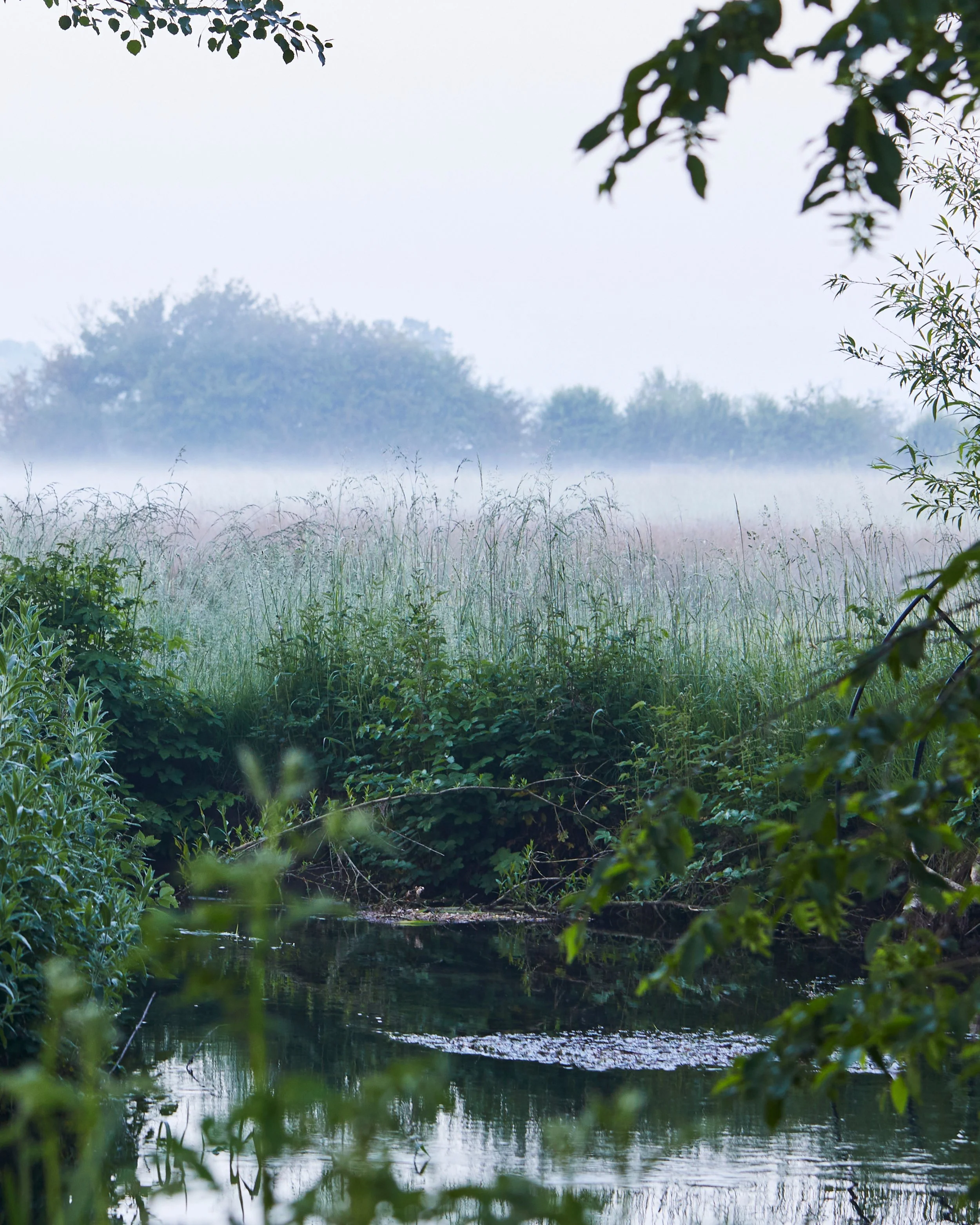
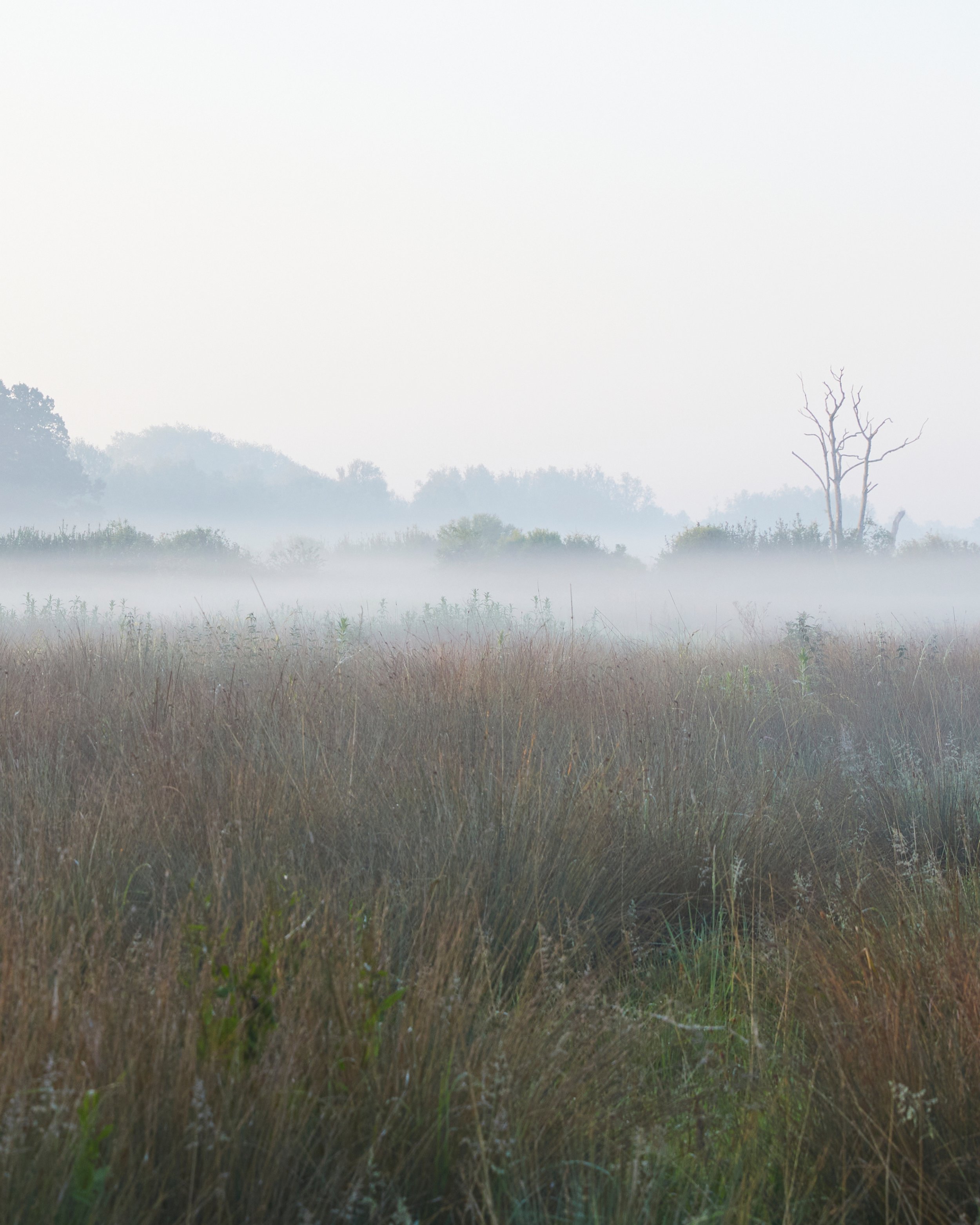
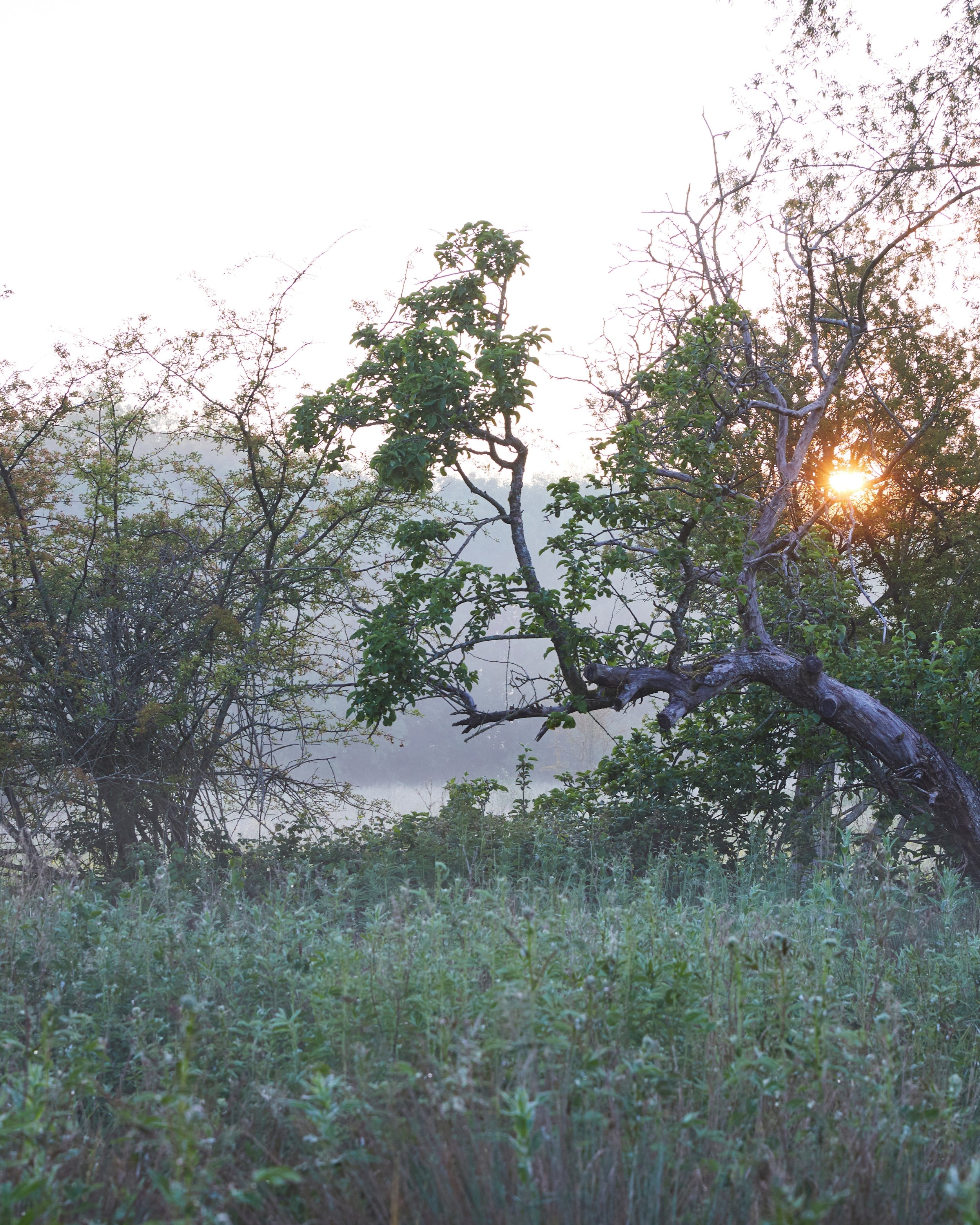
The seasonal visitors shown in this thought piece are a joyful feature of the winter landscape at Thyme.
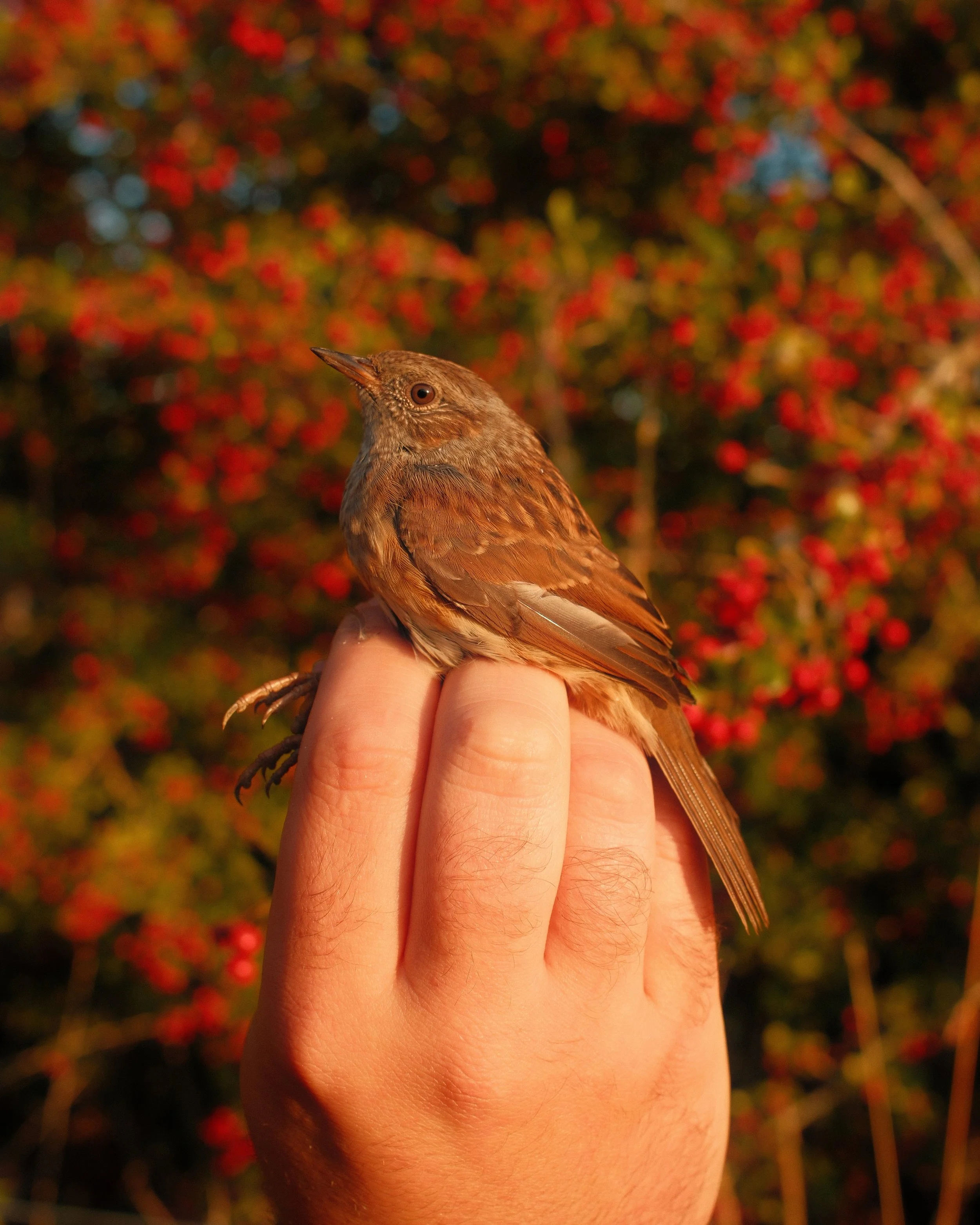
The Dunnock
Prunella modularis
Small and shy by nature, the Dunnock is an ubiquitous species that can be found amongst the hedgerows that border our water meadows at Thyme.
Also referred to as the ‘Hedge Sparrow’, the Dunnock mostly stays put all year round and rarely travels further than 1km away from its birthplace.
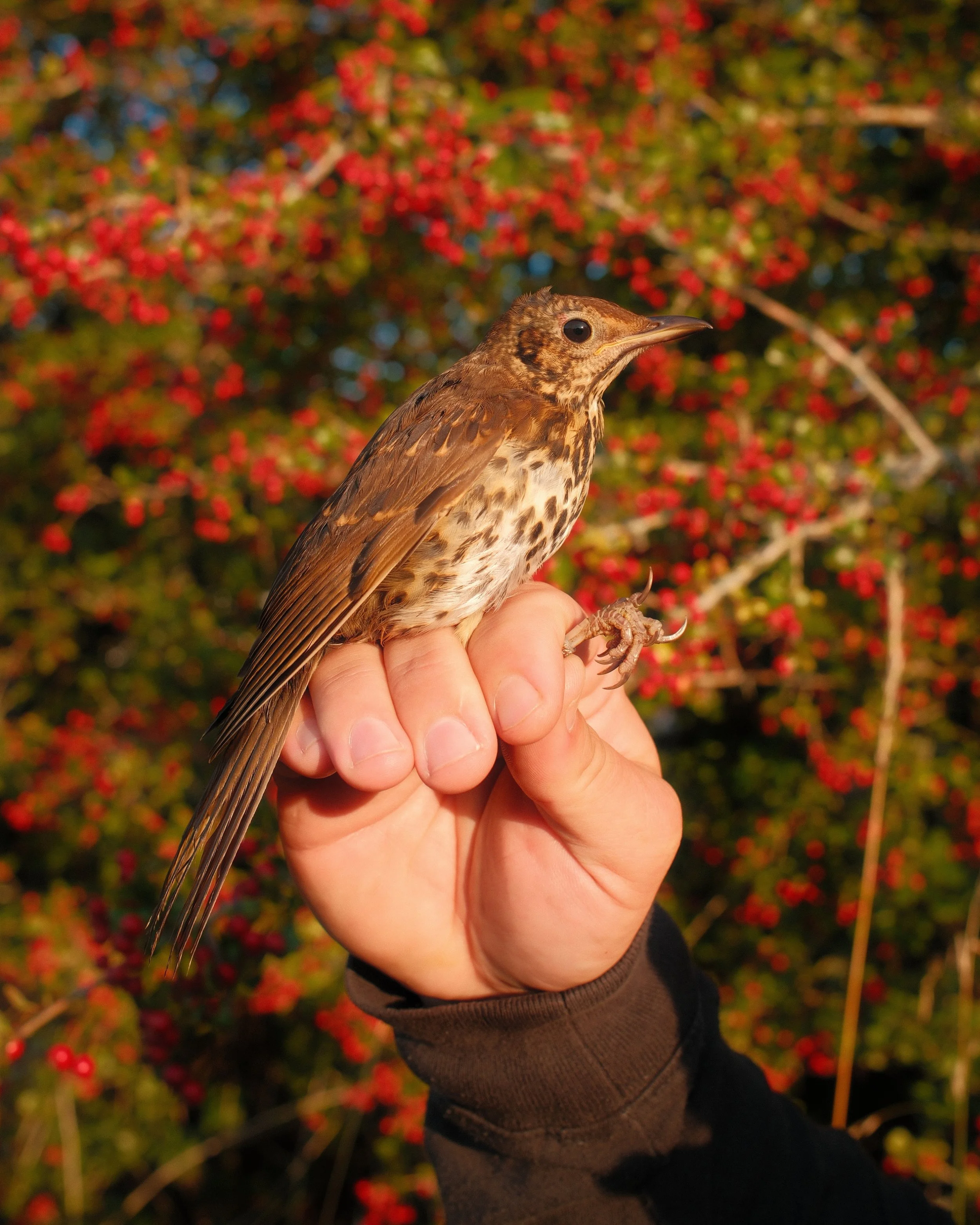
The Song Thrush
Turdus philomelos
One of the most prolific songsters in the meadows, the Song Thrush is renowned for its repetitive melodies and beautiful blue speckled eggs, often producing three broods in early spring.
The Song Thrush is also a skilled hunter, one that seeks snails when the ground becomes too hard to dig for earthworms. A behaviour that is signature to this species is the cracking of snails shell against a stone.
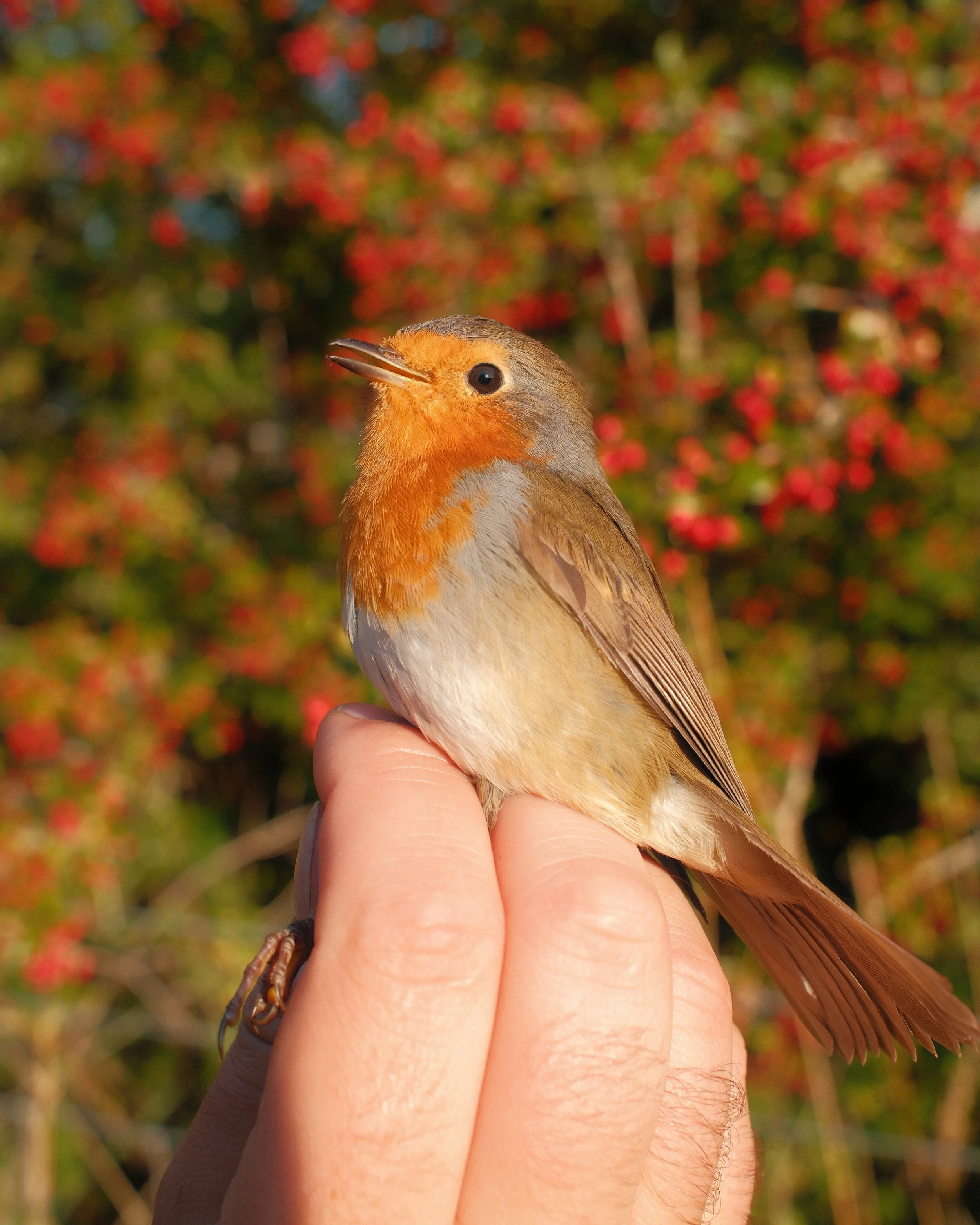
The Robin
Erithacus rubecula
A flash of red with a territorial song, the Robin is a common sight at Thyme and has made many a friend in our productive gardens, occasionally perching on our gardener’s hands.
The term ‘robin red-breast’ was first used in the Victorian era and referred to the postmen who wore red waistcoats when making their deliveries.
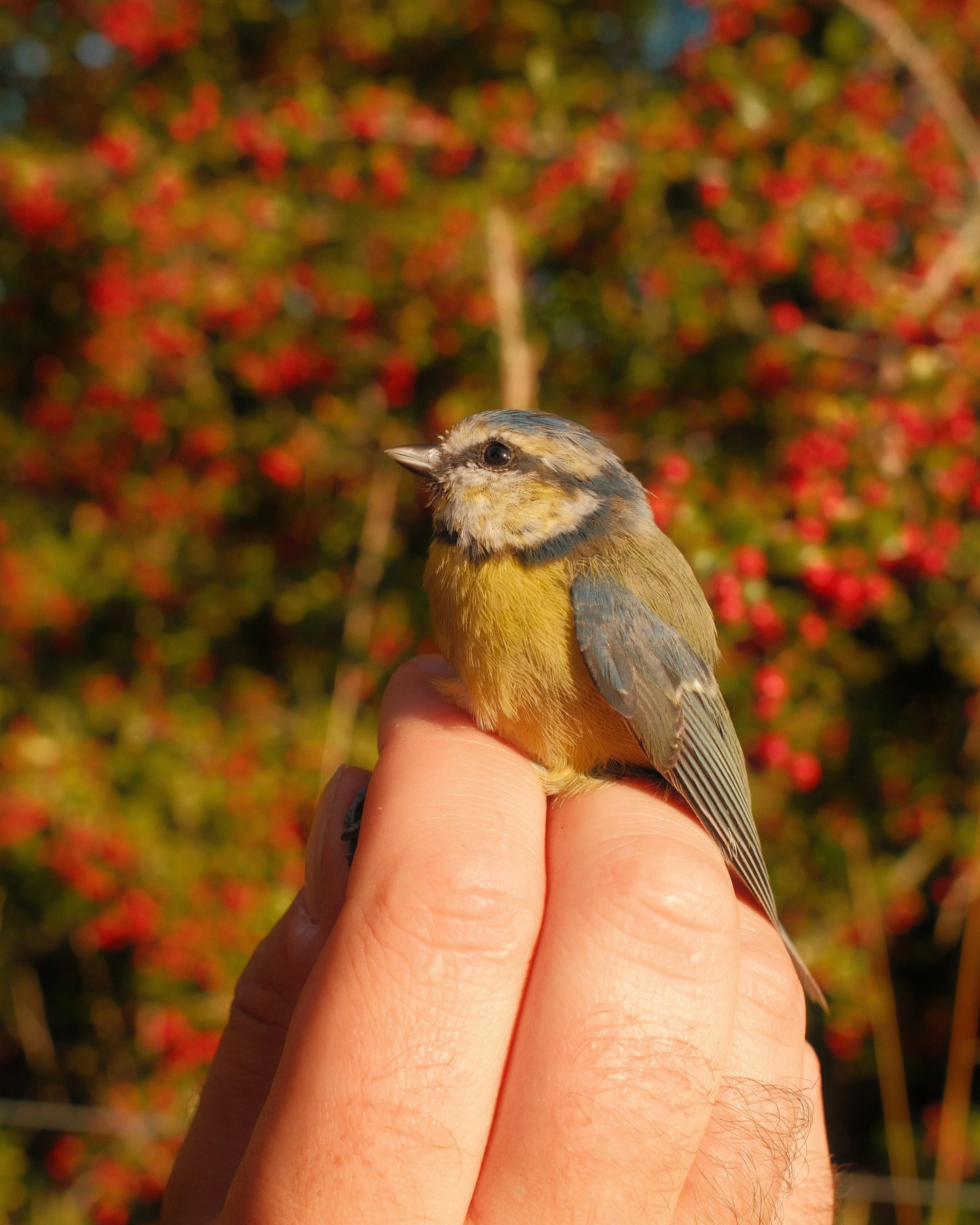
The Blue Tit
Cyanistes caeruleus
In the depths of winter, the Blue Tit can be found roaming the water meadows in mixed flocks with various other tits, including the Great Tit and Long-tailed Tit.
These charming little birds produce famously large clutches once a year. This clutch is laid alongside the emergence of caterpillars, the perfect opportunity to feed their hungry fledglings.